In this article
- Step 1: Decide what your audience can pay for
- Step 2: Make it easy for people to buy from you
- Step 3: Treat your time as a business resource
- Step 4: Learn to understand your finances
- Step 5: Build relationships that last beyond a single post
- Step 6: Choose tools that fit your stage of growth
- How FanHubb helps creators build their businesses
Content creation can start as a hobby, a creative outlet, or a way to connect with people who share your interests.
Over time, however, you may begin to ask a different question: How can I turn this into a business?
The answer involves more than gaining followers or publishing more often. A business needs a way to generate revenue, deliver value to customers, manage transactions, and keep track of its finances.
You don't need to build a complicated company overnight. You can start by treating your creative work as something people can support, purchase, or book—and then develop the systems that help you manage it.
Step 1: Decide what your audience can pay for
Start by identifying what you create and what your audience values.
Your options will depend on your skills and niche, but common creator business models include:
Memberships: Fans pay on a recurring basis for ongoing access or benefits.
Premium posts: Customers pay to access premium material or downloads.
Tips: Supporters contribute voluntarily because they appreciate your work.
Paid messaging and custom requests: Fans or clients pay for specific interactions or personalized work.
Bookings and consultations: Customers schedule time with you for coaching, professional advice, sessions, or other services.
You don't need every option. Select one or two that fit your audience, test demand, and expand only when it makes sense.
Step 2: Make it easy for people to buy from you
A social media profile can introduce people to your work, but it may not provide a clear way to purchase everything you offer.
A dedicated creator page can help bring your paid options together. Visitors should be able to understand who you are, what you provide, and how to become a customer or supporter.
If you offer appointments, make your booking process equally clear. Explain your services, provide the relevant scheduling information, and make payment expectations easy to understand.
Reducing friction makes the buying experience easier for potential customers.
At a glance
Start with one or two paid offers your audience already values, then expand when it makes sense.
Give people one clear place to buy or book, with the price and what happens next spelled out.
Keep your transactions, refunds and payouts organized. Gross revenue is not the same as take-home income.
Step 3: Treat your time as a business resource
Every creator has limited time.
If you spend hours coordinating appointments, answering repetitive questions, tracking payments, and searching for transaction records, you have less time available for creating and serving customers.
Look for tools that simplify routine tasks.
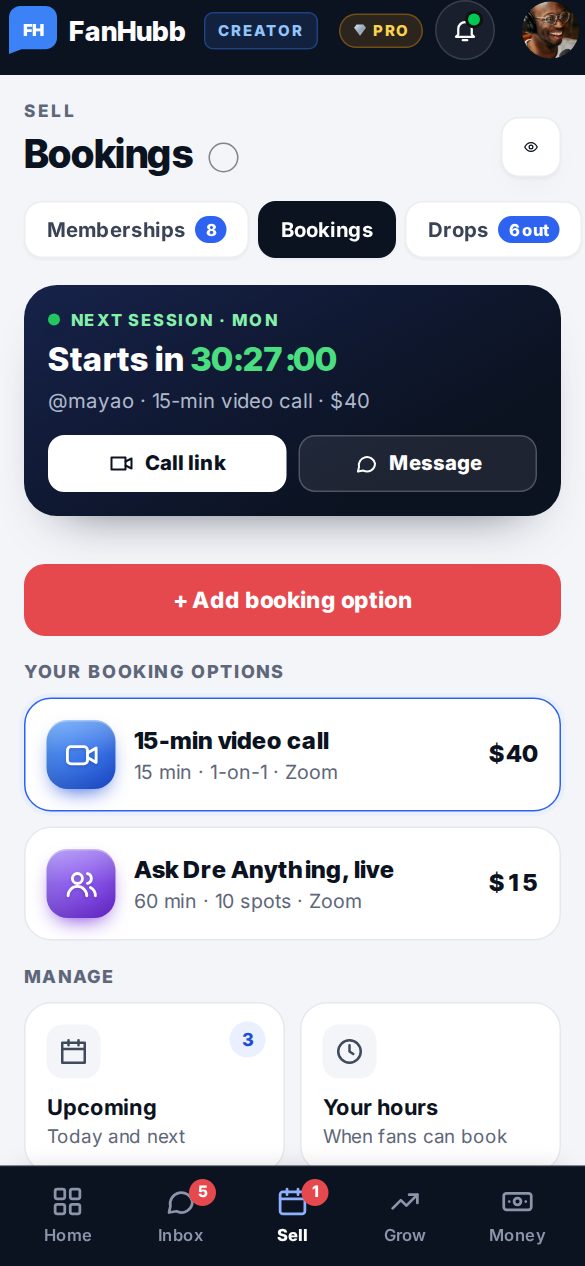
Booking tools can help manage scheduling, payments, reminders, and link tracking. Organized transaction records can make it easier to review earnings and locate financial information.
The goal isn't to automate every personal interaction. It's to spend less time on avoidable administration.
FanHubb Bookings: scheduling, payment, reminders and link activity in one place.
Step 4: Learn to understand your finances
A creator business should have a clear picture of its financial activity.
Track how much money comes in, which offers generate revenue, what fees you pay, and how much you spend to operate the business.
Keep records of transactions, refunds, and payouts. Organize relevant statements and financial documents so you can find them when needed.
Remember that gross revenue is not the same as take-home income. Platform fees, operating expenses, refunds, and applicable taxes all affect your final financial position.
Your personal income-tax obligations and any applicable sales tax or VAT responsibilities are separate questions. Understand the rules that apply to your circumstances and business structure.
Monthly statements in FanHubb break down sales, refunds and fees, and you can download them any time.
FanHubb earnings statements.
Step 5: Build relationships that last beyond a single post
A creator business becomes more resilient when it has ways to engage customers and supporters beyond individual pieces of content.
Memberships can encourage ongoing support. Premium posts can reward fans who want more. Bookings can turn your knowledge or expertise into paid services.
Your public content can continue introducing new people to your work, while your paid offerings give interested followers a way to take the next step.
Focus on delivering what you promise and maintaining offers that you can realistically sustain.
Bookings, payments and reminders in one place
Fans pick a time, pay, and get your link straight away. 48 hours after the session, it’s released, then added to your available balance on the date shown in Payouts.
Start freePayments processed by Stripe
Step 6: Choose tools that fit your stage of growth
You don't need every business tool available on day one. But as your activity grows, managing separate systems for memberships, paid content, messaging, bookings, and financial records can become increasingly complicated.
Consider whether your tools work well together and whether they make your daily workflow easier.
A useful platform should support your business model without forcing you to adopt features you don't need.
How FanHubb helps creators build their businesses
FanHubb is designed around three connected goals: helping creators earn, manage, and grow.
Creators can explore monetization through memberships, tips, premium posts, paid messages, custom requests, and bookings. Booking tools support scheduling, payments, reminders, and booking-link tracking.
Financial statements and transaction records help creators organize important business information, while other fan-facing features support their relationships with paying supporters.
Instead of thinking of your creator page as a place to collect subscriptions alone, you can approach it as part of a larger business: a place where your audience discovers what you offer and finds ways to support or work with you.
Your creativity can be more than content. It can be the foundation of a business. Explore FanHubb and start building the income opportunities and workflows that fit your goals.