In this article
You spend hours creating content, responding to followers, editing videos, or providing personalized services. But when it comes time to set a price, you might wonder whether people will pay what your work is actually worth.
So you charge less than you intended. You offer custom work for free. You spend an hour answering messages without earning anything. Or you create a membership that requires far more work than the price justifies.
Over time, these decisions can make it difficult to build a sustainable creator business.
Pricing isn't just about choosing a number. It's about understanding the value you provide, the time you invest, and the costs involved in delivering your work.
1. Calculate the real cost of your time
Before setting a price, consider how much work an offer requires.
A custom video, for example, might involve planning, recording, editing, revisions, and communication with the customer. The final deliverable might look simple, but producing it could take several hours.
The same applies to consultations, coaching, personalized messages, and creative services.
Ask yourself:
- How long does this offer take to deliver?
- What preparation or follow-up is required?
- Are revisions or additional requests included?
- What fees or operating expenses apply?
- How much time can I realistically dedicate to this work?
These questions help you avoid pricing a service based only on the time someone sees you performing it.
On Creator Plus and Pro, the Pricing coach looks at your custom requests each week and suggests when to open more spots or raise prices.
The Pricing coach in FanHubb Custom requests. Example tip.
2. Price memberships around the value you can consistently deliver
Memberships can create recurring revenue opportunities, but only when the offer makes sense for both the creator and the supporter.
Start by identifying what members will receive. That could include exclusive posts, premium content, special updates, community access, or other benefits that fit your audience.
Then consider whether you can deliver those benefits consistently without overwhelming yourself.
You don't need to offer unlimited access or promise a constant stream of new material. A manageable membership with clear benefits can be better than an ambitious offer you cannot sustain.
Review your membership performance over time. If people aren't joining, consider whether the benefits, price, audience, or way you're communicating the offer needs improvement.
Members-only posts and a badge$5/mo
Plus free downloads and early access$12/mo
Plus priority messages and custom credit$25/mo
Describe exactly what members get at each level. Fans can cancel any time.
FanHubb membership plans.
3. Stop treating every custom request as a favor
Creators often receive requests for personalized work, advice, or additional content through direct messages.
Some requests may be reasonable opportunities to connect with fans. Others require time and effort that should be compensated.
Decide which interactions are free and which services require payment. Make those boundaries clear.
For example, you might offer free general updates but charge for a personalized consultation, custom artwork, or a detailed project review.
Clear pricing helps customers understand what they're purchasing and protects you from repeatedly giving away work that takes significant effort.
At a glance
Count all the time an offer takes: planning, revisions and follow-up, not just the part fans see.
Price memberships around benefits you can deliver consistently.
A price is not profit. Fees, refunds, expenses and taxes all affect what you keep.
4. Make your time available for booking
If people regularly ask for consultations, coaching, private sessions, or professional advice, you may have an opportunity to turn those requests into a bookable service.
Create a clear description of the service, explain the price and duration, and give customers a straightforward way to schedule.
Connecting bookings with payments can also help establish expectations before an appointment takes place.
Rather than coordinating every detail manually, a booking system can make the process more organized for both you and your customers.
5. Understand what you actually earn
A price is not the same as profit.
Suppose you sell a service for $100. The amount you ultimately keep may be affected by platform fees, payment processing fees, refunds, business expenses, and applicable taxes.
Review your financial records so you can understand the difference between gross revenue and the amount available after expenses.
Also consider the time involved. A service that brings in more revenue may not be a better offer if it requires significantly more work.
The objective is to develop pricing that supports your goals and makes your time worthwhile.
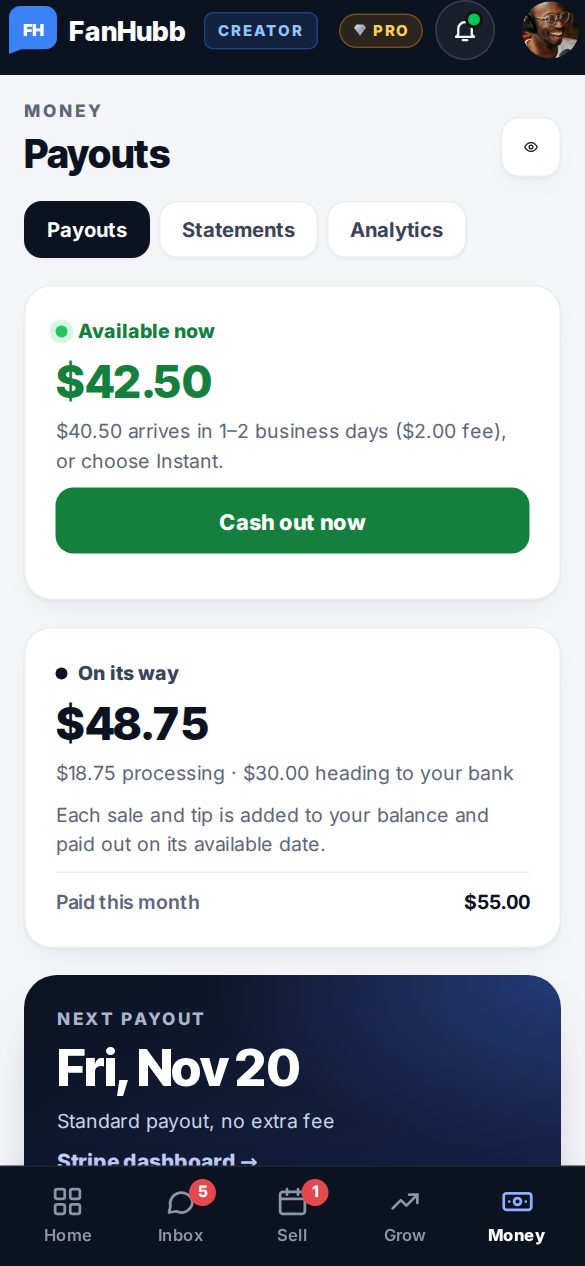
Monthly statements in FanHubb break down sales, refunds and fees, and you can download them any time.
FanHubb earnings statements.
How FanHubb helps creators monetize their work
FanHubb offers creators several ways to earn, including memberships, tips, paid content, paid messages, custom requests, and bookings.
Its Pricing Coach is designed to help creators think through pricing, while the platform's financial records and statements can help them review their transactions and earnings.
Creators can also use booking tools to offer paid appointments and services, giving fans and clients a clear way to purchase their time.
Instead of relying on a single price or income source, you can explore different offers that match what your audience values.
See exactly what you earn
Monthly statements show sales, refunds and fees. Payouts land free on the 15th of every month.
Start freePayments processed by Stripe
Your work has value. Give people clear ways to pay for it.
Explore FanHubb and discover tools to help you monetize your content, time, and expertise.